
I don’t paint styles
— I reveal states.
Immersive Artist — Installation, Painting, Sculpture and Experience Design
“Through my art, I seek to awaken an inner unrest — a feeling that makes the viewer sense there’s more beyond what the eyes can see.”
“Eu busco com minha arte despertar um incômodo interior — um sentimento que faça o observador perceber que existe algo além do que os olhos veem.”
我希望通过我的艺术唤起人们内心的不安,让观者感受到:作品之中,藏有超越眼前的东西。
Sua prática investiga estados emocionais a partir da relação entre corpo, gesto e inconsciente. Transitando entre pintura, escultura e instalações imersivas, seu trabalho cria experiências onde o espectador deixa de observar e passa a sentir.
Foi eleito o terceiro melhor ilustrador do mundo em 2018 pela Lürzer’s Archive e já recebeu prêmios em mais de 20 países. É considerado um dos artistas relevantes da América do Sul por plataformas como SaatchiArt e Singulart.
Em 2021, participou da Biennale di Venezia – Architecture. Suas obras foram exibidas nos telões do Madison Square Garden, em Nova Iorque, e premiadas em eventos internacionais como o Art Revolution Taipei.
Seu trabalho integra coleções privadas e institucionais, além de colaborações com organizações como Condé Nast, com presença na Vogue Germany, e projetos com a Penguin Random House.
Sua produção segue expandindo-se internacionalmente, conectando arte, filosofia e experiência, da superfície ao espaço, da imagem à presença.
His practice investigates emotional states through the relationship between body, gesture and the unconscious. Moving between painting, sculpture and immersive installations, his work creates experiences where the viewer shifts from observing to feeling.
He was ranked the third best illustrator in the world in 2018 by Lürzer’s Archive and has received awards in more than 20 countries. He is considered one of the most relevant artists from South America by platforms such as SaatchiArt and Singulart.
In 2021, he participated in the Biennale di Venezia – Architecture. His works have been exhibited on the screens of Madison Square Garden in New York and awarded in international events such as Art Revolution Taipei.
His work is part of private and institutional collections, including collaborations with organizations such as Condé Nast, with presence in Vogue Germany, and projects with Penguin Random House.
His practice continues to expand internationally, connecting art, philosophy and experience, from surface to space, from image to presence.
他的艺术实践围绕情绪状态展开,探索身体、动作与潜意识之间的关系。作品横跨绘画、雕塑与沉浸式装置,创造从观看转向感受的体验。
他于2018年被《Lürzer’s Archive》评为全球第三优秀插画师,并在20多个国家获奖。被 SaatchiArt 与 Singulart 等平台视为南美具有代表性的艺术家之一。
2021年,他参与威尼斯建筑双年展。其作品曾在纽约麦迪逊广场花园展出,并在台北艺术革命等国际展览中获奖。
其作品被私人及机构收藏,并与 Condé Nast 合作,刊登于《Vogue Germany》,同时参与企鹅兰登书屋项目。
他的创作持续在国际范围拓展,将艺术、哲学与体验连接,从表面延伸至空间。
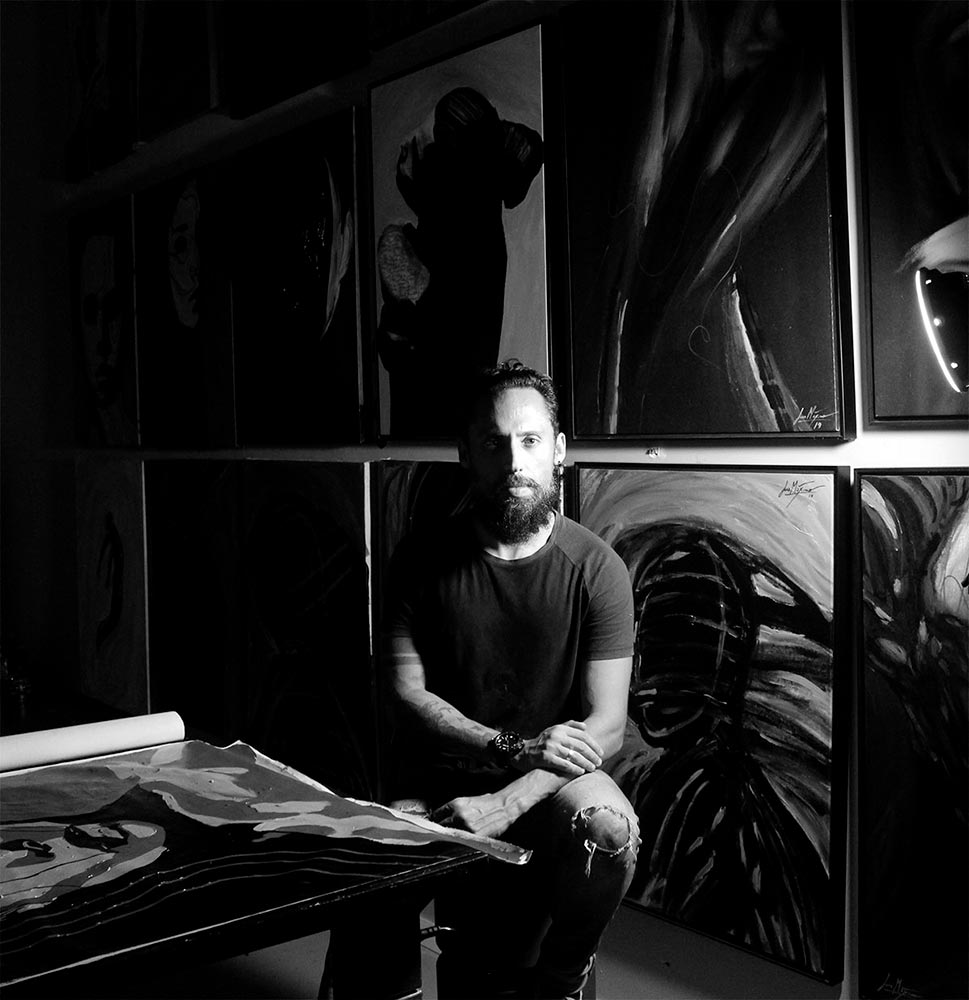
“Não importa para mim se o que eu faço é arte ou não. Ela só precisa tocar as pessoas de alguma forma — senão, de que serve?”
“It doesn’t matter to me whether what I do is considered art or not. It just needs to touch people somehow — otherwise, what’s the point?”
“我并不在意我所做的是否被称为艺术。它只需要以某种方式打动人,否则又有何意义?”
Uma obra feita de verdade —
e de potência interior.
Cada gesto revela um estado de ser.
Seu trabalho não se organiza por estilo, mas por estados. Juca transita entre pintura, escultura e instalações imersivas, construindo uma linguagem que transforma emoção em matéria.
Sua produção atravessa técnicas como óleo sobre tela, acrílico, nanquim, caneta, arte digital, pintura tridimensional, esculturas em clay e resina, além de instalações com madeira, ferro, Corian e impressão 3D.
Mais do que técnica, o que define sua obra é a intensidade do gesto. Uma estética visceral onde pinceladas, traços e estruturas carregam tensão, impulso e direção.
A obra nasce do contraste entre delicadeza e força.
Traços finos são atravessados por camadas densas de empasto e choques de cor. O gesto não corrige — afirma.
O resultado são composições que acessam estados ocultos e se impõem pela presença.
Não explicam. Acontecem.
每一个动作,都是一种存在状态的显现
他的创作不以风格为框架,而以状态为核心。Juca 游走于绘画、雕塑与沉浸式装置之间,构建出一种将情绪转化为物质、再将物质转化为存在的语言体系。
A work built from truth — and inner force.
Each gesture reveals a state of being.
His work is not organized by style, but by states. Juca moves between painting, sculpture and immersive installations, developing a language that transforms emotion into matter.
His practice spans oil painting, acrylic, ink, pen, digital art, three-dimensional painting, clay and resin sculpture, as well as installations using wood, iron, Corian and 3D printing.
More than technique, what defines his work is the intensity of gesture. A visceral language where brushstrokes, lines and structures carry tension, impulse and direction.
The work emerges from the contrast between delicacy and force.
Fine lines are crossed by dense impasto and color clashes. The gesture does not correct — it asserts.
The result is a body of work that accesses hidden states and imposes itself through presence.
It does not explain. It happens.
他的创作涵盖油画、丙烯、水墨、钢笔、数字艺术、三维绘画、黏土与树脂雕塑,以及以木材、铁、Corian 和 3D打印构建的装置作品。
相比技法,更定义其作品的是动作的强度。这是一种具有冲击力的视觉语言,笔触、线条与结构承载着张力、冲动与方向。
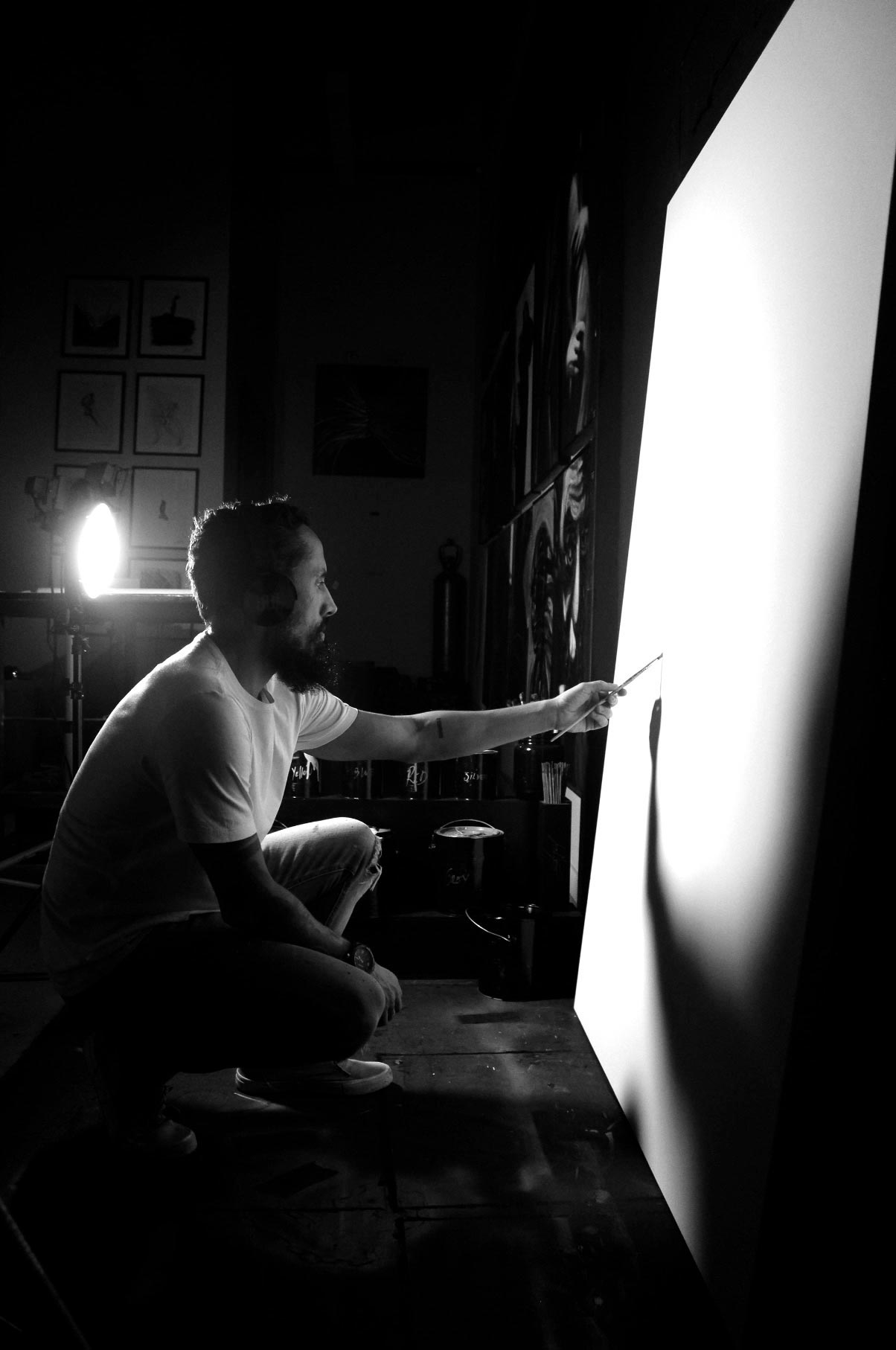
Painting process at Juca Máximo Studio, Fortaleza, Brazil — 2022
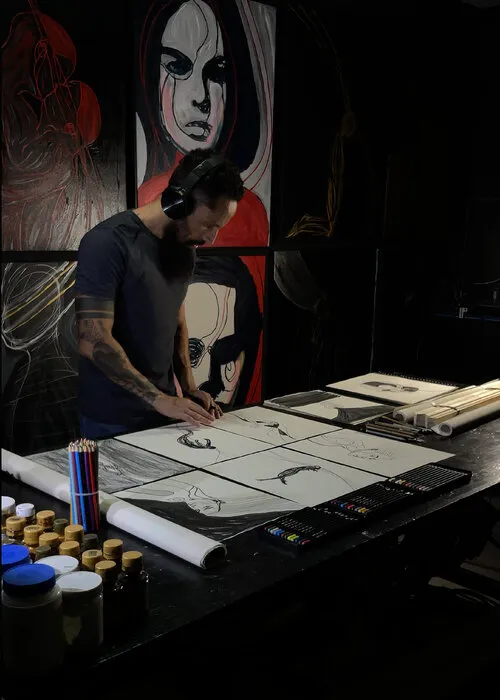
Drawing process at Juca Máximo Studio, Fortaleza, Brazil — 2023
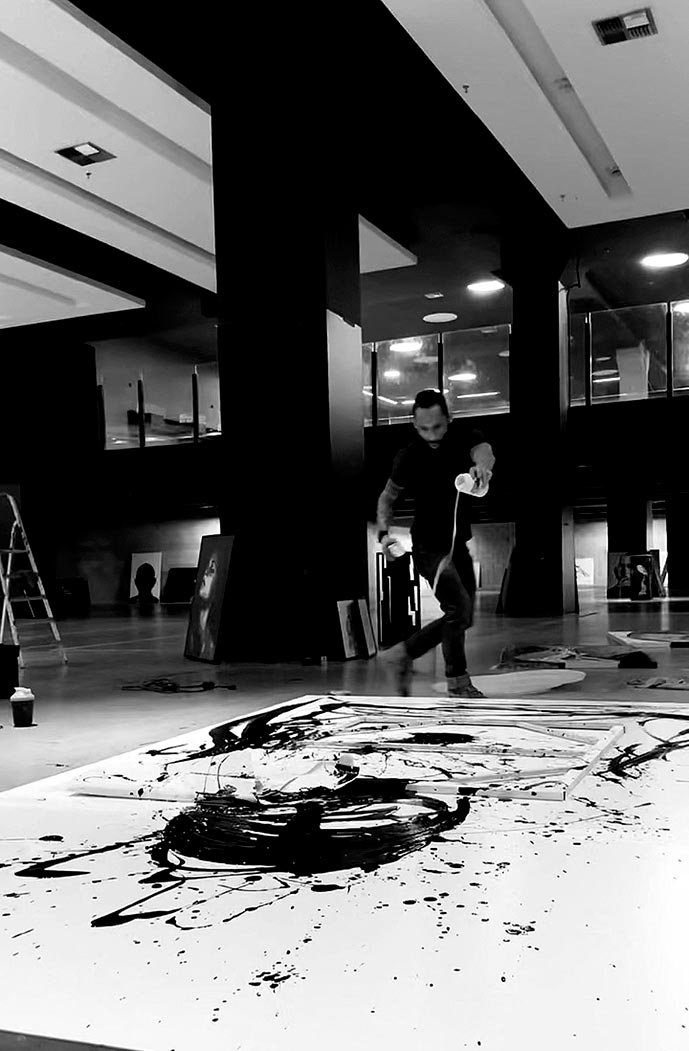
Action painting process at Juca Máximo Studio, Fortaleza, Brazil — 2024
O gesto como manifestação do sentir
Sua obra parte do inconsciente e se materializa no corpo. Cada composição propõe uma travessia sensorial que conecta memória e intensidade. O trabalho não busca explicar, mas provocar estados.
Gesture as the manifestation of feeling.
His work originates in the unconscious and materializes through the body. Each composition creates a sensory crossing between memory and intensity. It does not aim to explain, but to provoke states.
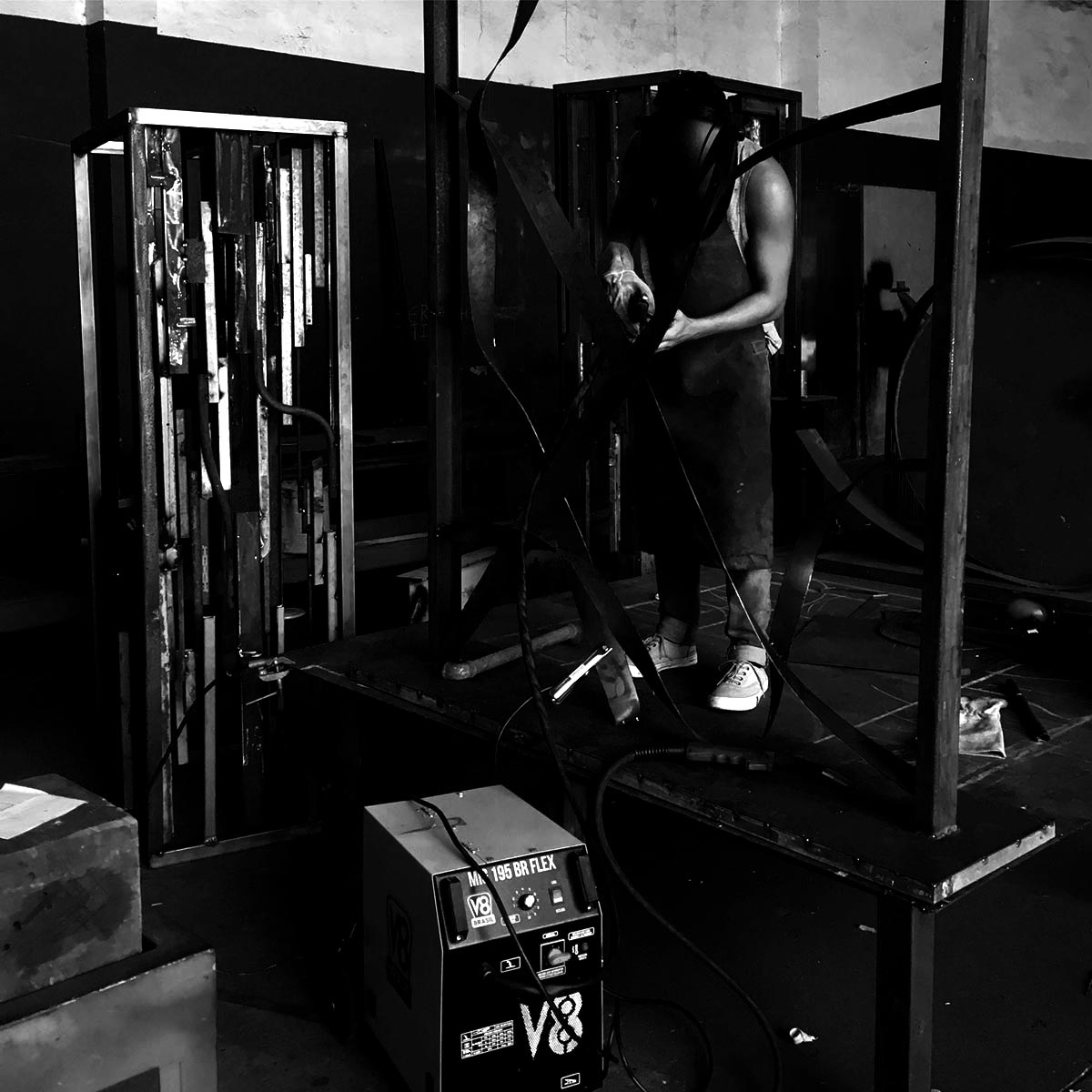
Sculptural process at Juca Máximo Studio, Fortaleza, Brazil — 2021.
Sua base conceitual atravessa quatro campos: filosofia, psicologia, fé e arte. Assim como Schopenhauer fala da “Vontade”, Spinoza da “Potência de Agir”, Nietzsche da “Vontade de Potência” e Freud do “Consciente”, sua prática busca tornar visível aquilo que normalmente permanece invisível: o verdadeiro sentir.
Formalmente, suas obras articulam contraste e tensão. Traços delicados convivem com pinceladas densas e empasto, criando equilíbrio entre controle e impulso. Esse princípio se expande para esculturas, design e instalações imersivas, onde o espaço passa a integrar o corpo da obra.
Estrutura da Obra:
Sua produção se organiza em quatro eixos:
States — energia, força e intensidade
Body — memória, identidade e presença
Expression — o momento em que o sentir se torna visível
Unconscious States — gesto, instinto e expressão
Nos últimos anos, seu trabalho se expande para instalações imersivas, onde escultura, luz, arquitetura e interação constroem experiências. Nesses ambientes, o espectador deixa de observar e passa a participar, atravessando tempo, memória e espaço.
São sentimentos, traços secretos e agressividades na tela.
— Juca Máximo, 2025
“Eu não pinto estilos — Eu revelo estados.”
His conceptual foundation moves across philosophy, psychology, faith and art. As Schopenhauer speaks of “Will”, Spinoza of the “Power to Act”, Nietzsche of the “Will to Power” and Freud of the “Conscious”, his practice seeks to make visible what usually remains unseen: true feeling.
Formally, his works articulate contrast and tension. Delicate lines coexist with dense brushstrokes and impasto, balancing control and impulse. This principle extends into sculpture, design and immersive installations, where space becomes part of the work.
Structure of the Work
His production is organized into four axes:
States — energy, force and intensity
Body — memory, identity and presence
Expression — when feeling becomes visible
Unconscious States — gesture and instinct
In recent years, his work has expanded into immersive installations, where sculpture, light, architecture and interaction create experiences. In these environments, the viewer shifts from observing to participating.
These are feelings, hidden traces and aggressions on the surface.
— Juca Máximo, 2025
“I don’t paint styles — I reveal states.”
作品诞生于细腻与力量之间的张力之中。
细微而近乎无声的线条,被厚重的肌理、色彩冲突与能量所穿透。动作并不修正,而是确认。
他的创作源于潜意识,并通过身体得以显现。每一件作品都是一次感官上的穿越,连接记忆、存在与强度。它不试图解释,而是激发状态。
其思想基础横跨四个核心领域:哲学、心理学、信仰与艺术。正如叔本华提出“意志”,斯宾诺莎提出“行动的能力”,尼采提出“权力意志”,弗洛伊德提出“意识”,他的实践试图让那些通常不可见的东西变得可见:真实的感受。
在形式上,他的作品建立在对比与张力之上。细腻的线性结构与厚重的笔触及肌理并存,在控制与冲动之间形成平衡。这一原则同样延展至雕塑、设计以及沉浸式装置之中,在那里,空间成为作品身体的一部分。
他的创作围绕四个核心维度展开:
States —— 能量、力量与情绪强度
Body —— 通过形体探讨记忆、身份与存在
Expression —— 情绪被转化为可见形式的瞬间
Unconscious States —— 动作、本能与无意识表达
近年来,他的创作扩展至沉浸式装置领域,通过雕塑、光、建筑与互动构建体验空间。在这些环境中,观者不再只是观看,而是参与其中,体验时间、记忆、存在以及身体与空间之间的关系。
这些是情感、隐秘的痕迹与画面中的冲突。
— Juca Máximo, 2025
“我不描绘风格,我揭示状态。”
Join the Collector’s Circle
Be the first to discover new series, exhibitions, and private releases directly from Juca’s studio.
Juca Máximo is an award-winning Brazilian visual artist recognized internationally for contemporary emotional art. His portfolio includes expressive paintings, figurative abstraction, and large-scale installations exhibited in over 20 countries. From the Venice Biennale to the Madison Square Garden screens, his work connects Brazilian identity with universal feelings, positioning him as a leading name in Latin American contemporary art.