
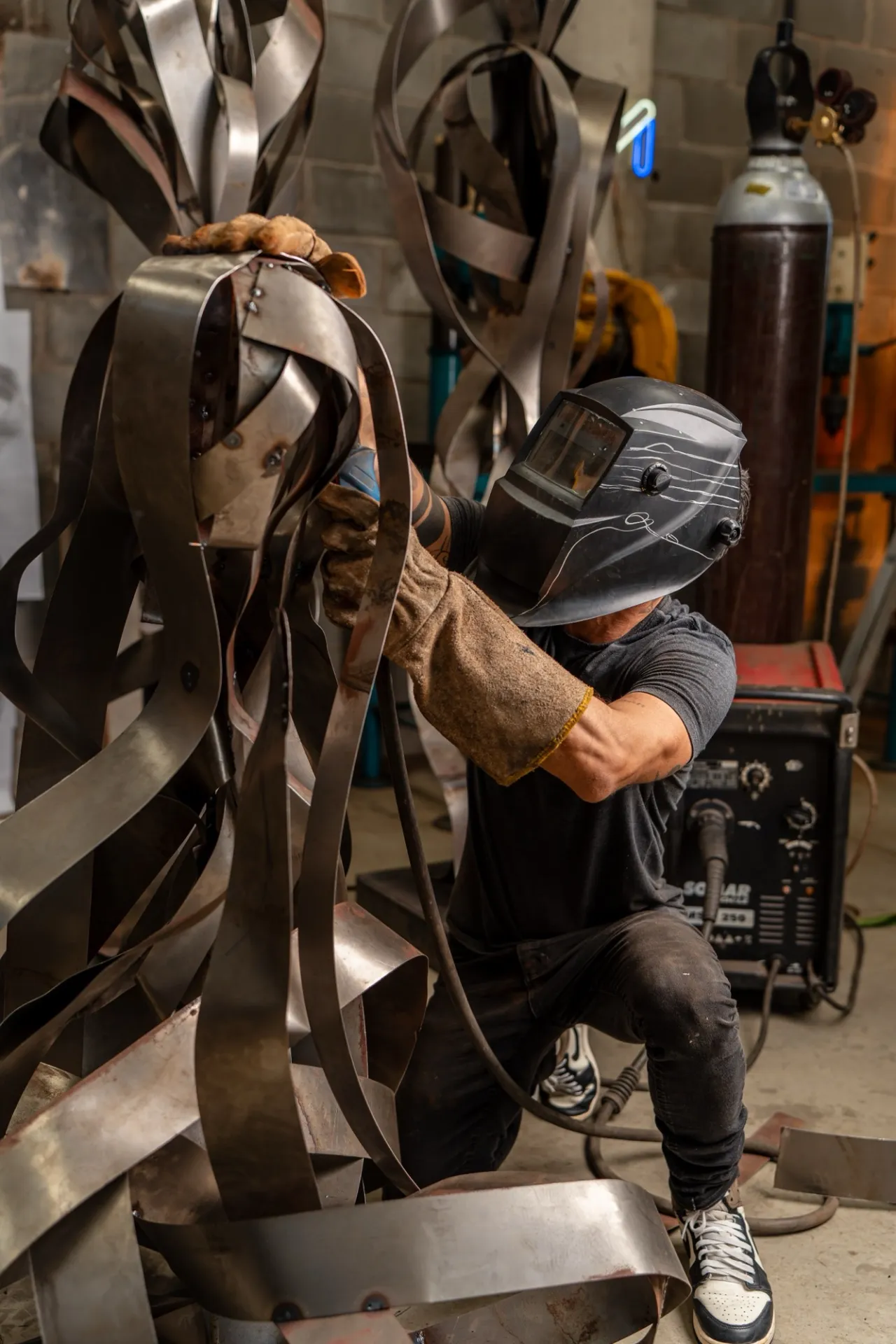
The Guardiãs are four monumental steel sculptures I created for À Flor do Aço at CASACOR Ceará 2026. Standing about 3.5 metres tall, the female figures welcomed visitors at the entrance. The project used approximately 2.5 metric tonnes of steel. In the workshop, my task was to give that material the gesture of a human body.
How the steel sculptures took shape
I worked directly on cutting, bending and welding the steel. A curve could change the angle of a shoulder. A joint between two plates could carry a line forward or interrupt it. As each figure took shape, I returned to those decisions, adjusting the steel until the posture came through.
Working at this scale meant changing where I stood. Up close, I could see how the plates met and where the work had left its marks. From farther away, I could read the whole posture and see how much of a gesture held up at that size. I moved between those two distances throughout the making of all four sculptures.
From the workshop to the CASACOR façade
At CASACOR Ceará, the installation changed how each gesture was seen. Visitors first caught sight of the silhouettes against the façade’s black steel cladding. As they walked past, the scale of the figures became clear in relation to their own bodies. The placement of the four sculptures made crossing the entrance part of the work.
In my ongoing research into states of feeling, I’m interested in what the presence of a body can stir. In the Guardiãs, that presence begins with a steel plate, passes through the hands that cut and weld it, and takes on another scale when someone walks through the entrance.
Concept, artistic direction and fabrication · Juca Máximo
Steel · ArcelorMittal
Guardiãs de aço: da oficina à CASACOR Ceará 2026
Quatro figuras femininas de cerca de 3,5 metros receberam o público na fachada da CASACOR Ceará 2026. São as Guardiãs, esculturas monumentais de aço que criei para À Flor do Aço. O projeto empregou cerca de duas toneladas e meia de aço. Na oficina, meu trabalho foi dar a esse material o gesto de um corpo.
O gesto começa na oficina
Participei diretamente do corte, da dobra e da soldagem do aço. Cada operação mudava a leitura da figura. Uma curva alterava a inclinação de um ombro. Uma união entre chapas podia dar continuidade a uma linha ou marcar uma interrupção. À medida que o volume se formava, eu voltava a essas decisões e corrigia o que a figura pedia.
Trabalhar nessa escala muda até a distância de onde se olha. De perto, eu acompanhava o encontro das chapas e as marcas do trabalho. De longe, conseguia ler a postura inteira e perceber quanto de um gesto sobrevivia ao aumento de escala. Esse movimento entre o detalhe e o conjunto fez parte da construção das quatro peças.
Da oficina à fachada
Quando as Guardiãs chegaram à fachada, o gesto passou a ser visto em movimento. Quem se aproximava primeiro via as silhuetas contra a pele de aço preto. Ao passar por elas, a distância diminuía e a altura das figuras se revelava em relação ao próprio corpo. A posição das quatro esculturas fazia da entrada parte da experiência da obra.
Na minha pesquisa sobre os estados do sentir, interessa-me o que a presença de um corpo provoca. Nas Guardiãs, essa presença começa na chapa, passa pela mão de quem a corta e solda e ganha outra escala no encontro com quem atravessa a fachada.
Concepção, direção artística e execução · Juca Máximo
Aço · ArcelorMittal